
Episode transcript
Parag Dixit
Hi, Modhit. How are you?
Mudit
I'm good, Parag. How are you doing?
Parag Dixit
I'm going very well, very well. Thank you very much for joining in again today. And today, what we are doing? We're tackling the big elephant, right? Yeah. Oh, Sydney,
Mudit
Sydney,
Parag Dixit
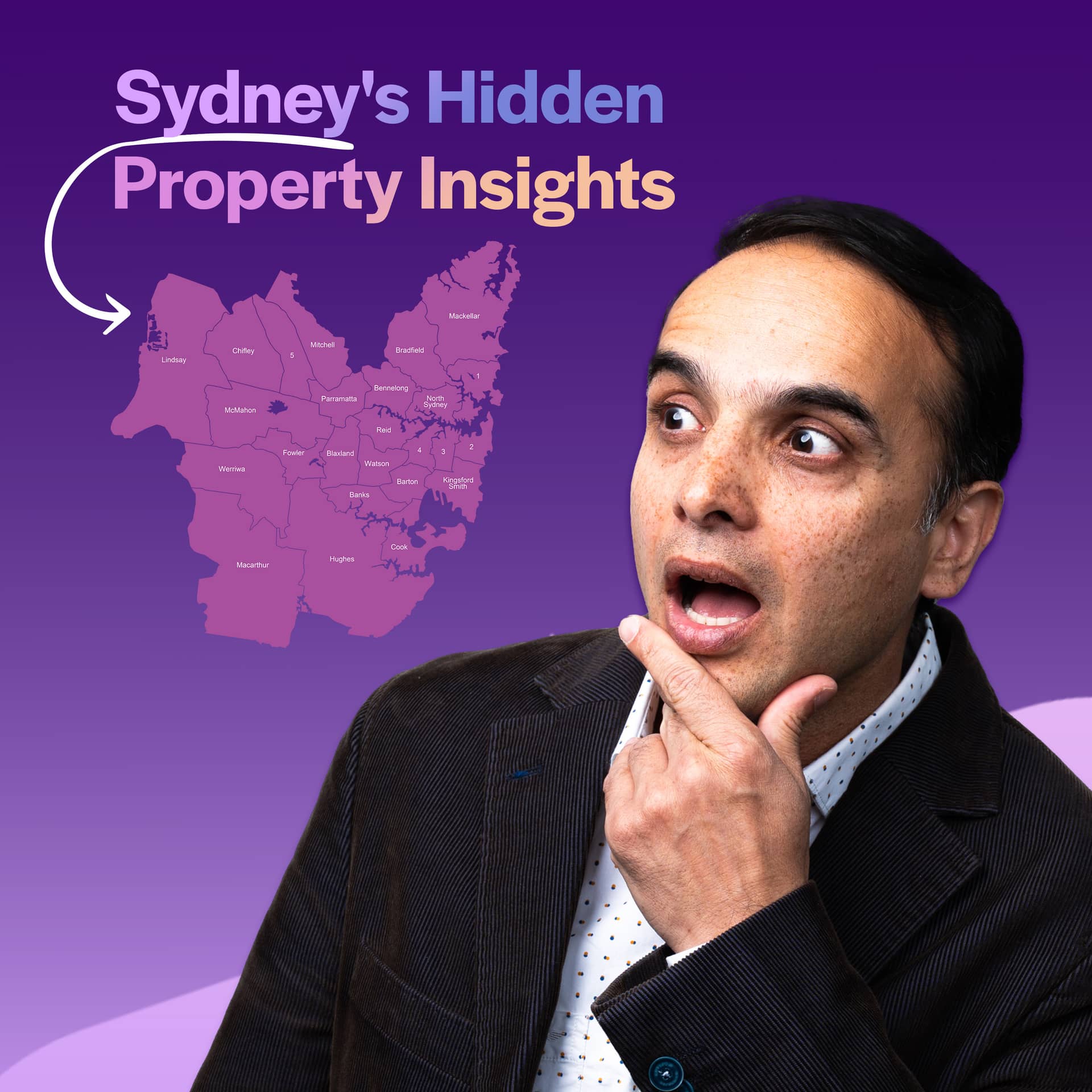
Sydney. Big one, big one. I think it's a big one because it's it's a huge place in itself. It's a it's half a country in itself, I suppose, but that's why we'll do it in three parts, you know, and we'll just try and understand what really drives Sydney, which
Speaker 1
is this one,
Parag Dixit
and then we'll do another one, which we'll talk about which are the good areas to invest in, and which will do the second part and third part. Obviously, which ones which you can avoid, which not bad ones, but avoid in present times, and then obviously it's a changing nature. But Sydney, looking at prices reaching $2 million horizon everywhere, the house is reaching there. Mostly, that's the median price. Interest rates are here, but it's there. It's there. There and people are still finding opportunities. That's interesting, right?
Mudit
Absolutely, and and it's it's across different kinds of buyer segments. Whether they're looking for somebody looking for the first home, there are people who are looking for upgrading. There are people who are looking at investment opportunities. So there's demand despite despite the prices being being where they are where they are. Yeah,
Parag Dixit
where they are, and it surprises people, right? It always surprises people that you know. If if we break it down into today, when we're going to talk, we'll obviously we'll be talking in terms of macro about what's what's pulling the city into in various directions, right down to suburb selection and what are expensive and affordable pockets, and whether you're talking of the Australian Dream, whether it has changed or not, but we know Sydney is expensive. We know yields can be relatively low here. We know population growth is slower than some of the other capitals. You know, and we know that market is currently correcting or softening, and yet investors continue
Mudit
to participate because Sydney has such an inherent structural demand drivers that are very difficult to replicate in the other towns. Well, absolutely right, and and if you talk about let's say the greater city region, we're talking about roughly 5.6 million people, right? So that's that's a lot, one of the biggest in the whole country, and we're talking about 75,000 people migrating into the into the city last year itself. And although there has been outward migration as well, there have been like close to 3030, or 33 people, 33,000 people who have moved out. But overall, through overseas migrations, around 80,000 people have come in. So demand for Sydney in Australia-that's one of the biggest centers of of demand.
Parag Dixit
Absolutely right, and you know, you know, you you right the the affordability that's like it kind of pushes some people out, but the environment scene, the lifestyle which it gives to you, the employment, the education, the international connection-you know-everything continues to pull people in. It just brings people into it, and they all realize that Sydney is not one property market. It's-it's like hundreds of suburbs, and each suburb has its own price point. Its suburb has its own buyer demand and a lifestyle appeal and a rental market and a very different growth story everywhere, you know. And that's why we'll be talking of. It's it's just not. Is this Sydney good enough? We're talking. How should buyers actually read Sydney suburbs before they buy or invest? And we'll look at we look at beyond those simple parameters of suburb rankings and median prices. You know the yeah yeah no
Mudit
I'm saying yes the the idea is that not to say to figure out that not just a blanket saying that okay Sydney is good not good and all but go down to that level of cut it into different slices and see that what makes a suburb more attractive compared to another one. Correct. On what basis should a buyer who is looking either from different lenses, looking as a first home or an upgrading or as an investor, from what lens should they look at? What should be their budget? What should be the strategy if they are looking at different suburbs? And what are the critical parameters across different of them?
Parag Dixit
Yeah, absolutely right. We need to. We just want to understand that as a key characteristics in Sydney market, why it chugs along so well despite so many ups and downs in the economic cycle. It just keeps on getting love and attention from all investors and owner occupiers and first and buyers all along. So let me let me ask you on this, Model. So why do you think Sydney keeps attracting buyers even though affordability is like it's stretched right? It's stretched like stretched right now, right?
Mudit
Absolutely, affordability is is stretched to I think the worst ever that Sydney has seen. It's it's where the the the gap. Between the asset and the income has been widening, but overall, if you look at it, one the biggest factor is that it's it's the the global hub effect we call it right. So it is not just any other Australian city; it's the big demand center of Australia. Anybody who is looking at let's say looking at opportunities, looking at moving and looking at doing something with their life. Whether you talk about any kind of sector, you talk about retail, healthcare, tourism, construction, infrastructure, any any any kind of segment you look at, and you will find that people are able to find opportunities here. Yeah, so it's a big demand driver that ways.
Parag Dixit
Yeah, 100% It's a full full economy in in itself, it's a full economic infrastructure in itself, and why should it not be? It drives 23% of Australia's GDP. It's huge. It's massive. It massive, massive. And you, like you rightly said, in every kind of a spectrum, you can get an employment here. You can employment is important. You know, if I want IT, if I want this, if I want that, whatever I want, I will get it. And when I have employment, then it's great because those jobs will create households, and those households will create a housing demand, and that housing demand will eventually support those property values and the rents, and everything gets gets going from there. It it doesn't. It it it depends on that, and it starts and ends there, right?
Mudit
Absolutely right. And people and and because of what has happened in Sydney, it's not a single CBD market now. There are so many centers which have developed here. Whether we talk about CBD, there is North Sydney, there's Parameda and Westmead area, then there's Liverpool area, then there's Norwest area Macquarie Park. So many centers have developed that anybody who's looking for employment opportunities, they are able to find across different areas. And and these these different areas they also help you create your own budget. So it's not that if you have to live closer to your job, then you have to be closer to CBD only. It's not that anymore. There are so many centers, and you can find opportunities near where you want to work. Yes, 100%
Parag Dixit
You don't need to migrate out of Sydney. Within Sydney, you've got lots of areas, and if you find a job here, or you can find a job there, and you can travel between these two areas, and it's the same hour or so, and you can do your thing, what you want to do, and it brings a fantastic lifestyle, right? It brings you world-class beaches. You know, you can go to a Bondi, you can go to a Manly, you can go to all of these fantastic harbor living areas where you can enjoy. You you have fantastic schooling, selective schoolings, private schools. You have everything what you want here,
Mudit
and even from a from a livability point of view, one is lifestyle. Second is the the weather, the climate, the vibe, everything kind of whatever your lifestyle is. Whether you are looking at a city pub culture, whether you are looking at a comfortable suburb culture, the the weather permits it. That you can be outdoorsy, you can be indoors. So all of that combined, Sydney gives that that whole feel to this is from the
Parag Dixit
emotional pull into it. I mean, the city drives you in, it pulls you in, and you love it. Yeah,
Mudit
absolutely. And and on so so that is one factor on the demand side. We are saying that yeah, there is there is too much. There's too many so many factors which kind of attract people. But on the other side, on the supply side, the there is a shortage in terms of what Sydney the the land area available itself because on one side there's ocean, then there's the national parks on the other side. So it kind of becomes a limited land supply. It's not that you can continuously keep on expanding Sydney now because that becomes a little constrained. That creates an opportunity for property prices to be in a certain behave in a certain way. Yeah, yeah,
Parag Dixit
yeah. And you've booked Blue Mountains as well, right? Yes. And you, and because of all of this, and it's not only employment. Some sometimes you know there are builders who can go insolvent, and you can have a higher construction cost, and you can have council delays, and you have all of those issues, and that all brings supply back to the front because so much is needed in Sydney. You're talking of 1000s and 1000s of houses which are needed in Sydney itself. That it's a it's a problem, and that's why even when it it correlates even with migration as well. You know, so the there is obviously a net migration which goes out. There's a migration which comes in. There people who are lost, but still Sydney's population keeps on increasing because Sydney is-it's definitely expensive, and it's-it's expensive enough to push some Australians out. You know, they-they unfortunately move out of Sydney and they say, "I can't afford it, and they go to regionals or some other towns and some other cities, some other states. But it is so desirable that keeps on attracting people from overseas or domestically as well, and they come, and they come, and they live, and they work, and they thrive, and they do well, and they look at opportunities, and then they invest.
Mudit
Absolutely right, and and on top of it, there's education. I think if we talk about demand, then for families who are living here, they're looking at their kids. Good private schooling, high school, universities. There's a very good infrastructure of university and the whole ecosystem of one is the universities. Then for for the for the younger young adults finding internship opportunities, then getting employed there. So the overall infrastructure, whether for people who are locally living here or for migration, the overseas students, the whole infrastructure, university infrastructure that provides a good opportunity for them.
Parag Dixit
Yeah, phenom, yeah, phenomenal opportunity, and that's why you will have so many students who come here, and there's so many people who come here from in all diversity, like we talk of, and that's why people, whenever they are wanting to invest or when they want to buy something, they're not really buying a property, you know. They buy, and technically, an access to the Australia's best and the deepest job market, the best education market. It gives you a phenomenal lifestyle. You can. It Sydney may may slow down because interest rates are higher, but you cannot kill the fundamental urge of people to live and thrive here, and that is what drives Sydney. But this also doesn't mean that Sydney prices will perpetually rise. It doesn't mean that you know we know today it's slowing down. We know today it's it is it's a bit a softer market, and it that's why it you know investors need to separate long-term fundamentals and short-term fundamentals in Sydney. You know, it it has come down like in June 26 quarter, I suppose, the last quarter which went by. It came down by 3% or something. But there is, and large part of it was in June as well after the budget came in. But it's a very, it's a very, it's a very compelling proposition to understand here that this Sydney investment fundamental thesis is that it's not that Sydney will never fail. It's that investors believe that demand will continue to regenerate over long periods of time, and so they get pulled into it, and so they want to keep on keeping it as an option to invest because they know the future is still going to be bright.
Mudit
No, absolutely. The the the short term turbulent of the turbulence of the market. I think people who are looking to invest here, they are looking beyond that. They are saying long term. Yeah. If there is demand, which is going to drive the city, there will be supply, which will of course supply will be there, which will come up. But long-term demand will push property prices in a certain direction. But I think that also poses an interesting question: that because it's the biggest city, does that automatically make Sydney as the most lucrative investment destination? I think that's that's a question there. That's a
Parag Dixit
good question, right? But and I and I strongly believe that it actually does not. It actually does not because you know it's it's good. Okay, it's good. This huge demand base is there, huge population, everything is working well. But that's only a starting point, right? Bigger doesn't mean that it automatically becomes better. Sydney's contains so many, so many, so many micro markets. So many micro markets. It's it's and each market is so different. You know, one suburb, just the neighboring suburb, five kilometers away, can have good houses. You know, good schools. You know, it can have not too much available to construct. You can't do much there. You you got the house. You got the house. Very great owner occupiers. And similarly, just a few kilometers away can be another suburb which has 1000s of apartments in there. Huge supply coming in there, but maybe lower owner occupier demand, more investor demand, very little land. But that's Sydney, right? Just two suburbs, so diverse, so next to each other, and this is where the opportunity comes in. You know, the suburb selection opportunity comes in, and what suburb you select, that is going to determine the outcome. It's ultimately the kind of property you select, which will tell you how and what kind of an investor, you become. You don't really invest in Sydney, Sydney. You know, you invest in a particular property on a particular street in a particular micro market within Sydney. It's a small market within Sydney in itself, which is what comes here to the market.
Mudit
100% right. It's not. You can't say that I am just investing in Sydney. Yeah. Because Sydney is a collection of so many smaller markets in itself, and each micro market can behave very, very differently. They can have very different. The market cycle can be very different. The kind of opportunities can be different. If you're thinking as a investor or versus looking to house for a house to live in, then you can have very very different view, very different perspective on the same suburb and from on different suburbs. So I think Sydney has definitely got a scale advantage. There's no doubt about it that the sheer scale makes it one is attraction for people, but at the same time because of the scale itself, from a from a liquidity point of view, property stock market. Liquidity point of view, there's more liquidity, so there is more transactions can happen because there are different kinds of buyer demands which are there. So it's not that okay something comes up and then it just doesn't sell. So that is one big factor which the the scale helps there definitely, and size like you're saying is not a the size of the city is not a not a guarantee that because of that only it is attractive. Yeah,
Parag Dixit
yeah, yeah. It does. Yeah, correct. You're right. Size doesn't mean it doesn't give a guarantee here because it it it in fact on the opposite side it means that you will have a higher entry cost. A higher there's an entry barrier which comes in there because there is a cost because the prices are higher. Then that higher prices bring you lower rent yield, so which means I will have a large holding cost. My holding costs are going to be higher, so I need to be sure. I need to I need to be very very I can sustainable kind of an investment. I need to do. I need to know what I'm doing. I need to know my yield, which is going to come from there. I need to know my capital growth, which come come to there. If I am looking at pure cash flow. Sydney is not the place. Maybe regionals and smaller towns and other capitals are is the place to you. But if you're looking at a long-term capital market, which is very very likely to perform in capital growth, which gives you a more more than defensive, I think aggressively defensive cap capital growth, then Sydney is the market, and that's what is going to determine whether how whether you want to invest in Sydney or not because you need to take care of this entire universe before you say okay I you are you can you can handle it you can handle Sydney you can handle a low rental growth rental yield you can handle a high capital growth but you need to be strong-hearted to be able to invest there, and that becomes that that that always drives you the way you would want to behave when you're buying in Sydney. And when you want learn, want to be when you want to see how you want to behave when you're investing in Sydney. One key criteria has always been population, but you know it. This it's a good question again to see whether population growth will matter when choosing a suburb in Sydney. Within Sydney, states-wise, we see population and growth and all that. That's an important matrix. But within Sydney, is that matrix an important matrix which comes in?
Mudit
No, it is definitely important. But I think population matrix is not used in the right way by a lot of people, I think it is important to slice it down further to understand that it's not just people are moving. Okay, it's it should be about you need to assess that who is moving, what is the who is moving, what is the objective of people moving there, what kind of because that will help you determine that okay if these are the people moving, then this is the kind of housing demand which will be there, so that will help you analyze it better. That if such and such kind of people are moving, this is the kind of their requirement. Then what are the suburbs or what are the areas that people are going to be keenly looking for? So then that is where the whole analysis comes into play. That okay, now based on my better understanding, okay, what kind of people are moving? What is going to be their opportunity? What is the opportunity which is making them move? What kind of housing demand will that generate? Yeah,
Parag Dixit
yeah,
Mudit
that helps you analyze the micro markets much better.
Parag Dixit
Yeah, absolutely right. No, I understand that. I and I, you're so right about saying this. I, if I, if I just think about the some of the fast growing areas in the last couple of years, you know, Box Hill and Marsden Park and all that area, all side, all 1718, 16% kind of growth annually in there. But they have phenomenal growths which has come in there. But any investor cannot say if it's 17% population growth, then it's 17% opportunity growth. That's not the way it looks like because the it it also brings other challenges there. If a box hill or any other areas, all of these areas are going to say that 5000 new houses are going to come in, the prices are not going to rise. There's going to be a different demand and supply thing which is happening in that suburb itself. So we may find that it's better off to go to another suburb which is having a moderate population growth, but it has a scarcity of houses there, and so that is building in demand. So, and that that has happened there. A box hill has maybe have moved faster or not, but a Quaker hill has moved much faster than than box hill because of the same thing that because it had a bit of a scarcity in there, and that's why people wanted to go there, and what people wanted to say. Okay, why should I invest in Box Hill when I can do a better job in Quakers Hill, which is an existing suburb? And it says that okay, my my suburb, which I am investing in, has got an employment growth. It has got a great household income. It has got infrastructure. It has got housing which is scarce, and it got a phenomenal rental demand. It got a phenomenal owner-occupied demand. All of these things tell me, okay, I want to go there. There are schools there, there are parks there. There's everything in that suburb. That's where I want to be. Versus a new suburb may be nice. A lot of people are going there, but doesn't doesn't doesn't do good to me, right? At
Mudit
all? Absolutely right. So because you need to start figuring out. That like you're saying the boxes and the australs and all. So some of these are like fringe areas, and that's where because closer to the city, the the available land start has started has reduced so much that more and more housing supply is coming in areas which are a little farther away, and that's where whether you look you want to live closer to the city. What is again the question that what is bringing you in the city? What is make what is the demand driver, and where would you want to live? What kind of housing is is right for you? It's more of people who have young kids and who have families versus people who are looking at upgrading or versus people who are looking at downsizing. So that all mix changes a lot.
Parag Dixit
Yeah, absolutely right. Various, very. You've been so right to say if a suburb is attracting students, which is another good population in Sydney, then it would have one bedder, two bedder apartments and all that stuff. If a suburb is attracting professional workers, then it needs to have connectivities, transport connectivities, cafes, employment, easy place to go to employment, all of that. So we we are looking at various stuff. When when when we are looking at all of these various opportunities, we will need to know okay, which market do I want to go to? Which market is giving me that opportunity? What kind of houses are there? What kind of people are coming there? And whatever kind of people are coming there, is that providing me the access? Is the population that is growing there wanting my particular kind of property which I'm investing in? That's the critical bit. If I don't understand this bit, then I will, I will, I will, I will mess up into in terms of what I'm going to invest in, and then I may find that I've not got out what I wanted to achieve in in the start placed health.
Mudit
No, 100% right. And when you start looking at from that angle, then I think there are probably. I mean, I would say that there are three key aspects to look at. One is one is looking at the demography, like we're saying, rather than just pure sheer numbers. That what kind of who is moving and why they're moving? Second is that the socioeconomic factor there, the buying power of the people who are moving there. That it's just not sheer number. Who is buying? Who is moving? And what kind of property? What what attracts? What will attract them? What is what is their capacity? What is their motivation? Motivation like right. And the third is the infrastructure. Is there good infrastructure which is in that particular area? Infrastructure, social infrastructure, public infrastructure, all of that combined. So I think these three key factors need to be considered if you're looking as an investor, and then see that which are the supply constraint areas. Map it with this kind, this demand. Map the supply side of it, look where the constraint is, and that's where the whole analysis can give much better result.
Parag Dixit
Absolutely right. Yes, supply and infrastructure both has to be taken together into Sydney because, as as we rightly said, two suburbs behave very very differently, and if you if you point out with a different objective into a different suburb, then you may not achieve what you want to achieve. But let's let's bring it to do different things. We're talking of suburbs close to each other. So in Sydney, why do you think two neighboring suburbs perform very differently?
Mudit
I I think as as a father of two young kids, I think school catchment is one of the biggest reasons there, you talk about let's say let's say Hillshire, right? So there's Bockham Hills and then the suburb is Seven Hills. Okay. Now the school demand, for example, here it's one of the best schools rated in the whole state. So just one road dividing the two suburbs, but the property prices there's huge difference between the two. Huge difference. Of course, there are other factors. The council is different and all between the two, but school demand does does a lot of difference there.
Parag Dixit
Yeah, absolutely, and in fact, I think even transport, right? If you have a good bus station, metro, railway station, and a house within the same suburb or two different suburbs, similar kind of a house, but one is so close to the metro station, one is so far off. One is five kilometers away. Very different price range, right? Metro is changing so much now in Sydney. So much it is changing, and it is it is impacting the way people would live and people would decide because it makes it so convenient.
Mudit
Absolutely, if you somebody is let's say 700, 500, 700 meters away from the metro, which is like walkable, versus two kilometers away, not too far, not too far, just two kilometers. But two kilometers makes it a little difficult to make it walk. And then maybe if you have to take a car, and then you know, okay, if I take my car, I don't know where will I park and all. So that itself is changing completely changes the whole dynamics.
Parag Dixit
Yeah, parking. Where where do you find parking near a metro station? You know, sometimes you know some of these stations I know that you have to reach there by 7 a.m. in the morning. Otherwise, you can't find parking. And then, if you have good to go to the city, it's very nice to go to the city. 40 minutes here in the city from from from Rouse Hill or from Walker Mills and all these areas, Bella Vista. But then, you need to park the car. The last
Mudit
mile itself can take 20 to 25 minutes. Yeah, yeah, and it's
Parag Dixit
it's not a great thing. So, and then I. So property mix is also good. You know, it's important. That's why two suburbs will change. Property in one suburb, if there are mostly houses, 70 80% are them houses. One suburb has 70 80% apartments. Then, then there is first suburb is so much of a scarcity. There more houses will never come there unless somebody subdivides. And if that council doesn't allow subdivision, that's gone. That's what it is. Whereas the first one, you finding apartments and apartments are coming in, so the values will differ. Values will very very differ in these. And that's
Mudit
where you also need to start looking into okay, what does the future supply look like? Because that's what is going to drive the supply in future. Yeah, and that's where the whole equation about whether your property, if you're buying an apartment there, then whether it will go up in value or not, it depends a lot on how much supply will is going to come in. If
Parag Dixit
5000 more apartments are coming there, then that's it. You're not going to grow in value, and that's what limits the value at times in Sydney. And you've seen in apartments, it's a two two kind of a toothpaste market. Some some places apartments are doing not so great. Some places they're just zooming ahead, and that's because of this, and also a very very important factor I think in Sydney is the owner occupier and investor mix. Owner occupiers are very emotional when they then they want to buy. You know, they want to have friends near to them. They want to have school. They want to have maybe grandparents nearby. You know, a lot of grandparents help take care of the kids. They they want connectivity. They want connectivity. All of that stuff. That all changes when you're looking at buying a particular property. If as an investor, whether as a owner occupier, it it'll be very important for you to distinguish all of these characteristics. And one suburb or between two suburbs, if you've got a large distance, then you are you change, and you say, okay, I don't want to be there. I want to be here, and then that changes your choices which you're making. Yeah, and
Mudit
and then the reputation of the suburb, the the the how it is looked up looked at, which also of course safety, security, and how how people view a suburb, and what's the social status associated to it, kind of thing, right? That that starts mattering because your lifestyle depends on that. Yeah, that becomes an important factor there as well. Then another one is that what kind of risks are there? There are, of course, whether it's about bushfire, flood zone risks, zoning easements. Those all start becoming a bit important when you start looking at a property from from any kind of angle where you want to live or you want to invest there.
Parag Dixit
Yeah, absolutely right. No, you're so right. You know, two suburbs we could be just right next to each other, but one's got a metro and one's got a great school catchment. It will behave completely differently over the next 10 years versus the other suburb, which doesn't have this, and that is why people get so attracted, and so people are going clusters into one suburb, and the other suburb may not have too many people vying for the same kind of house, maybe a better built house, but they won't vie for that, and that is that's what that's what always makes it difficult for people they will to understand. Somebody knew who comes in to Sydney will say, okay, why is it that across the road I find that this is worth 2 million and this is worth 1.3 million? So, and they don't really know, and they don't really know what to do, and they don't really know how to to differentiate between the two suburbs. And that brings us to an important question. Okay, what should a buyer check before they trust an online rating of of a suburb when you're buying in Sydney. What should you check, right? What should you check?
Mudit
Top 10 suburbs. Top 10 suburbs. See, I think I think a lot of people talk about the best 10 suburbs or the top 10 suburbs. I think the first question is best according to what? Best on the one is according to what and on the basis of what, right? So, of course, as as somebody who's looking to buy, we we tend to look into data, and I think I can't I can't emphasize more on data research. Data research is paramount, but important is to understand that how recent is that data? Are you looking what kind of data are you looking at? One is importance of that. Second is what kind of period of the data are you looking at? Are you looking at two months data or are you looking at one year for an analysis? Are you looking at the short term volatility which can impact the the numbers right now, or are you also looking at long term numbers over a period of three years, five years, kind of thing? So those are important things to look at when you are looking from a what to look for and what kind of data? 100%
Parag Dixit
100% And you know, you just rightly said that all of these data has to be correct and it has to be recent. You can't be looking at archaic data. You have to know that's ranking. What does it pertain to? Is it because of the kind of trees you have there, or is it because of the kind of cafes you have there, what is the best suburb's purpose? Whenever it is defining that, any is it financial, which is what we are looking at when we are talking of property investment, or is it just lifestyle? And lifestyle ones are really nice ones, beautiful suburbs in Sydney. Some some of them are such nice leafy ones, but they are worth investing or not. Very. And sometimes the sample data itself becomes so distorted that you're looking at a premium suburb, and they only had 10 houses sold in the last month. And that 10 houses, if the prices have fluctuated, it shows you very different picture, which is not the right picture in itself at all. It can
Mudit
completely skew the data there. I think some important parameters, of course, when you're doing data research as an investor, let's say, definitely to look at the days on market. The the the lower the days on market, then there's a higher competition there, right? So days on market, vacancy rates, these are important. How much vendors are discounting? Which is, if you look at the market today, then yes, there's discounting happening there. What kind of supply pipeline is there? I think that's that's very important to look at rental yields. I think that's you just mentioned somebody who's looking at to invest in Sydney in general itself. The holding capacity becomes so much more important. So that and that's where the the rental yield because that will determine what your cash flows is going to be like. So that is that is so so important as an investor,
Parag Dixit
yeah, 100% rental yield, rental competition. Whether there are people competing for the properties in that or they're not, and then like you rightly said a little while ago, how many apartments are coming in there? How many properties are coming in there? What is the development pipeline which is coming in there? All of these factors can become increasingly important because you know you know, it's infrastructure is fine. It can keep on creating demand, but it's it's it's cannot unlock supply. And if investors need to understand where and how they would want to play between both of them, because two suburbs in Sydney's can be very very different in the nature they operate because of these factors. But and and when you go online, when you see all those rankings and ratings and all of that, you need to really deep dive, and you need you can't be superficial in defining that that okay this is going to work for me and this is not going to work for me. And but so okay, I've seen I've started thinking about it, Madhuta. I've started understanding what what I should decipher. But whenever I go in Sydney and I see one big thing which I see is people will go to say one suburb which is say Parramatta, and then they'll go to look at a house in the Bockham Hills. Then they will go and look at a house in Box Hill. So and then they are all over the place and they're traveling all the time. So in all of these years, what do you think? How many suburbs in should a buyer look at in Sydney when they are wanting to make a decision? There are so many suburbs here, right?
Mudit
Absolutely, absolutely. I think I think how many suburbs before that? I think the first thing that any buyer, whichever whichever perspective you're coming from, first thing is to understand your finances. I think right because that itself shortlists to a large extent so much for you, right? So in terms of one is based on what your budget is, what your borrowing capacity is, how much deposit do you need, what kind of stamp duty will be there, what kind of if you're a first home buyer, then what kind of government grants are you benefits are you getting because of which you can buy a certain property. I think that whole that whole exercise of understanding the borrowing capacity and the budget itself is one of the first things to do. That will deter. That will shortlist a lot of suburbs, the kind of properties that you can go for. That makes the whole process of finding properties and not just wasting time going at places and then later figuring out that oh I can't even afford this. So I think that's one definite exercise to be done. First thing,
Parag Dixit
very fair, very fair, right? You don't want to go to a suburb which is which is which has houses worth $1.52 million when you can't borrow more than $800,000, and it's going to be a heartbreak. You like a house, you come back home. I like this. Let's look at this, and then you say, "Oh, I can't borrow. Then that's a that's a big heartbreak. And this happens so often in Sydney because of the way two suburbs behave, and that's so true. And I think one one important thing, or maybe the next important thing, or closer important thing, would be the strategy. What do I want to go there? Am I going there for capital growth? Am I going there for rental income? Am I going there for just to build a portfolio? What what do I want to do? Am I wanting to be near transport? Am I wanting to have easy transport to the city? Am I wanting to be close to my employment? Am I wanting to be close to my school's child school or is high school school? And I've seen families having diverse objectives in this. One child is going to primary school. One child is going to high school. Now you're torn. Where do I live? So all of these between some between somewheres. All of these will give you another short list, or maybe a shorter short list after you understood your borrowing capacity. Where I can go for right, and which suburb I should isolate and go, and then concentrate my energies there into those. 100%
Mudit
correct. I think finance, and then strategy, and of course, then after that, you need to also look at the market fundamentals itself. That how is the market performing right now? Not getting into that kind of analysis paralysis. Yeah, a lot of I mean, of course, data is important. There is no doubt about it. Research is important. Analysis is important. But there, ultimately, if you're looking to. Buy a house. That decision also has to be made. the The analysis cannot continue forever. I think a lot of people get stuck into that. That and that's so common because every time it's like okay, every property that they go to, they're like, oh, I whatever is the price, $30,000 lower would have been the right price for it. Yeah. So so because the data says that. So ultimately, it's about understanding how the market is moving and being able to find make that call that yes, this is what it
Parag Dixit
is. Yeah, absolutely right. And and obviously you can't focus on 50 suburbs, but also you should not focus on one suburb. Otherwise, you will obviously if you are wanting to be only in a particular suburb, and I've had clients which have come like that who say I just want to buy here, and that's fine. Then, then you're willing to pay the price. Then you're willing to pay a higher price or something like that, which which gives you which gives which gives which restricts you. But also, that's that's your choice. And you have people coming in with narrow choices in Sydney because they want to be there and they like to be there and they have various other factors which they consider when they want to be there and something. But as a first home buyer, when you meet some so many people, what should they start with buying where they want to live or where they can afford?
Mudit
I think we we this is this is very very interesting, right? Because as a first home buyer, especially, I think of course understanding that what is possible. I think that's the first question again with the budget-wise, because the a property in Sydney in in one suburb can start from let's say $600,000, right? And there's no upper limit, so you may want to buy a big house right now. But first, based on I think the the dream versus reality gap, right? So that's my dream home today. Am I my finances? Do they allow me to go there? And then, of course, maybe the finances allow, but then is it keeping me in a comfortable position? And I'm not having sleepless night because of it, right? So there is there is there are some uncertainties which uncertainties which will always be there. So I think that is one factor. And the second is, of course, if I am not able to buy my dream home. I will buy that in let's say three years, five years. How do I make a path of moving towards it now? So that could be a stepping stone. How do I stepstone? So there could be two ways of doing it. You buy a smaller property first, and then you save some more, and then you and if if really wanting to yeah, if really wanting to buy your own property, then you buy a small in unit first, and then move there. A lot of people, lot of people do that. The second is that again, which has become very popular, is rent investing. That you say, okay, I will continue to rent for now, but I'll buy something purely from investment perspective purpose, so that it grows in value. I make some wealth there, and then I'll use that deposit to buy my dream home after a few years. So, I mean, it it just depends on what your priorities are. What whether you're looking at stability right now or whether you're looking at making making that dream come true sooner. And so both have their own merits.
Parag Dixit
Yeah, your your either it's lifestyle which you want to decide upon or the investment which you want to decide upon. I think when you when you start asking questions to yourself, and if you, if the question which you're saying to yourself is where do I want to live, then I'm really looking at what kind of a life do I want to have. What is what's going to be around me? What's my social circle going to be? What's my lifestyle thesis is going to be? What's my choices in my life, which is on? But if I'm looking at where where do I want to invest, I'm looking at a very different lens lens altogether. Purely, pure investment, pure financials. It's maths. Pick up a calculator. Just see if it works out for you. If it doesn't work out, move to the next one. And that's where it is. It is. It's like that. But but the other part of Sydney is that you you people believe and people really really believe, and that's where they get caught out. So sometimes people will come to us that I want to buy a property in that particular suburb because it's a beautiful suburb and it's so expensive. Somebody is a big suburb in catchment, or it's a lot of good people live there and it's nicer houses. But when people look at this, they always raise a question to us and they always pose a question to everyone that if I am buying into the most say most or good very well affluent suburbs in Sydney, will they always hold value when the market slows
Mudit
down? Do you think that? See, okay. See, there are two. I think we need to understand the fundamentals there. One is the how is the supply. First, I think there's definitely a scarcity of of such areas, right? So if you talk about let's say eastern suburbs, or if you talk about north shore, inner west, there is no much new land available there. Supply is limited. First of all, need to understand that very clearly that supply is limited. Having said that, these properties come at a premium price price point. So number of people who can also afford that buyer pool is also small.
Parag Dixit
Slow, yeah, it's low. So that's why it holds value. That's
Mudit
why it hold it holds value. Now, then there are then if you look at from the from the perspective that who are the people who are currently owning these properties? Now that that's the wealth angle and who the people who are living there a lot of. High net worth individuals there. A lot of them have these properties which they got in terms of inheritance, or they have lower loans on these because they have gone up so much in value. The afford for them the affordability is there, but for a lot of other buyers affordability may may not be there.
Parag Dixit
Yeah, yeah, yeah, yeah, 100% And you know, there's always and these people are so and most of the people who are living in these high, good, good, very nice suburbs, they know the trade-off. They understand. They, they, they just don't buy emotionally. They understand the trade-off between rental yields and between between the capital growth, and they, they know that they can have a good capital growth property there, even though rental yields are horrible there. This, they just not even worth talking. One, one and a half, 2% kind of rental yields, but they are fine. And these people, because people are there with higher incomes, they are able to support it. When they are able to support it, because they say, "Okay, I this is prestige for me. This is somewhere where I want to live. It resonates with the kind of person I am, and hence I'm, I'm fine with this. I'm fine with this cost which is coming to me because I can afford it. And it's it's not that these areas will because of this always always hold value, but because they they they can they can fall. They can or they always things can happen that it's it's happening right now, and they always fluctuate a bit. But because they are such affluent suburbs, because they are there, there is scarcity. It's it's good, it's great, and it's very defensive and very good in the long term. But it doesn't mean that it will automatically produce a good capital value. No, absolutely.
Mudit
For for for a buyer who's looking at return on investment. These premium suburbs automatically do not become high return on investment because if because one is the requirement of capital is high. Yeah, yeah. And then you're looking at a certain percentage on it. So there will be premiumness doesn't make them high return on capital by default.
Parag Dixit
Absolutely right. The premiumness doesn't make them high capital value by default, and there are so many other factors which will come in. So many other factors which will bring into the high affluent suburbs, and and that's why people, when they want to buy there, they would. I think the first bit for them is that you want to buy there, and that's why you want to pay a premium for it. They don't care about the premium which you're paying because there is a value in that particular postcode or suburb or something, and then then you think of the finances. Then you think of this. So you're not really actively looking at whether it's going to be up and down, whether it's going to be movement, or it's going to be it's going to be difficult one to absolutely.
Mudit
I think there's a clear difference between lifestyle buying versus investment buying, right? So if you're buying for lifestyle, then you look at other parameters, very different parameters. Your focus is on how how the schools are, how the cafes are, how the whole vibe of the the place is. There's so much emotional value associated there. You're not looking at returns because you're not looking at investing in just selling the property. You're looking at living there for long term and all that. Right. So, versus investment, you you you you you don't look at all these factors from that lens. Your lens is okay. I I I put in whatever a million dollars from my side or $2 million from my side. How much is the return that I will get? Can I sustain this property? How much will let I save in tax? All all those factors become more important. Yeah, yeah, yeah,
Parag Dixit
yeah, yeah. Correct, correct. And that's why when when we if people a lot of times they ask me that is the best suburb to live in always the best suburb to invest in and I always talk to them and I say that you know there is there's a value of lifestyle, there is a value of lifestyle and obviously with the value of lifestyle investment is gets related to it but they're not the same thing. They're definitely not the same thing. You know, when you're looking at lifestyle, when you're looking at wanting to stay in there, when you say, okay, I would look at, okay, I would want to have a nice market and good cafes out there, good things to go into the there should be a there's an emotional value which I create along with it because of the whole infrastructure and surroundings, which I love, and the the feel which I love, the vibe which I love. Even if it gives me lower return, I don't mind. But as soon as I get into the other side of investment value, I'm straight away going to with my calculator. I want my capital growth coming in there. I want my rental yields to be coming in there. I need it to work out. I just need the sustainability to be happening there, I don't want it to do anything else. I want it to maximize either my tax benefits or cash flows or capital growth. Something should happen there,
Mudit
and it has to work as per my budget. I have so much budget. Yeah, I don't want to stretch too much where it becomes a lot of stress on my head because of buying an investment property. Ultimately, it's an investment property. I don't buying to create more wealth, not to not to emotion be emotional about
Parag Dixit
it. Yeah, and very clear the differentiation between the two objectives when you when you are looking at that, and that's why whenever whenever you look at Sydney, whenever you think of Sydney, you always the glamorized portion comes in. That okay, I I I love living in Bondi. I want to be living. Bondi, but it doesn't mean my next investment is going to be in Bondi. Absolutely, I really don't. It's a very different thing, you know. It's a it can be a financially attractive suburb for me, but it's not somewhere where I want to live. But I can invest, and I've seen people who are who've invested in far flung on different areas in Sydney where they would have never put a step on. They would have never gone there, but it's okay. It's a good investment. It's a good investment doesn't mean I want to stay there. A good investment means somebody wants to stay there and they're willing to pay me rent and I'm going to get a good percentage out of it and I'm going to get a capital growth out of it. And just I just have to answer this question: wherever I'm buying, are there going to be enough number of people who want to live there? Till there are enough number of people, doesn't matter if I want to live there or not, right? If I and it's it's always maths which counts for me in this kind of cases. And when maths is working and when maths is running for me and when maths is helping me, I'm saying okay, cool. This is something which is which is which is good and it's working out. But whenever you're looking at Sydney investors, you know, I I a lot of times when you sit down together with them and when you discuss with them and you say, okay, what are your investment goals and how do you want to go and where do you want to go? One question which they all pose, which is, okay, do I buy one large expensive property in Sydney, 2 million, 3 million, 4 million in a fantastic suburb, which I can own, and it has all this, everything in it, all the catchments and everything. Or do I buy, say, two affordable kind of properties within Sydney in itself? Does it work better for you in the first instance, or does it work better for you in the second instance?
Mudit
Again, I think there's no no right or wrongs there, but I think every investor need to evaluate it from certain specific parameters and see which one suits them more. I mean, one is to look at the growth potential. So you're investing in one. So how much is the land value component there? If you're single property, then you're looking at strong long-term growth in that one. Versus if you're looking at two smaller properties, then you have exposure to two different markets, so you are just diversifying your growth a little bit. So, so that is one factor. Second is that more from a cash flow and yield perspective. But if you if you're looking at a high value property in Sydney, definitely the rental yield is going to be lower versus two smaller properties will give you a better rental yield. So if your if your holding capacity is a challenge, then buying one large becomes a bigger bigger problem. Cash flow because cash flow definitely is important from a sustainability point of view. So that is another factor to look at. Third is that what kind of flexibility does it give? So having one, so you're basically putting all eggs in one basket versus if you have to, if times are not so good, let's say, if you want to have that flexibility, that okay, maybe I can sell one. I don't want to, but if you have big one, one single big one, then you will be forced to sell that one, right? So that flexibility has a value towards it. So I think these are some important factors to look at, and there's no right wrong here. It's all about what your financials are what your what your overall goal is. Which of these strategy will help you take there? So I think doing that is important.
Parag Dixit
Absolutely right. And finance, you rightly said, finance is so critical. Finance is so important. And when you look at finance, and when you look at more of when you look at an ABS data in in Sydney, when you're looking at investors, investors have kind of the in NSSW your your loans have reached about you know average loan is about $850,000 or something right now, but with a loan is there, loan commitments are still around 18% When loan commitments are 18% whereas the value has increased to about 25% you find that investors are now changing the way they think. Investors are saying, "Okay, I'm I'm not going away there. I'm becoming more selective, and my choices are getting driven by a lot of other factors. You know what what kind of capital growth is going to come in there? What kind of cash flow is going to come in there? What kind of borrowing capacity is going to come in there? Risks, as you mentioned, there. You know, diversification. What do I want to do in future? All of these come together in Sydney. When you're looking at a regional market or a smaller market or any other state, you don't look at so many factors coming in together. But when you're looking at all of in when you're looking at investing in Sydney, all of these come together, and when all of these come together, sometimes you may find that okay, my objective of buying one big property may or may not meet. No,
Mudit
absolutely right, and and I think these become a bit more important in Sydney is because of the higher values of property. So your commitment is much higher. Yeah, correct. So if things go right or wrong, we are talking about big numbers changing there, right? And that's where these these as an investor, you'll always compare all these parameters. But in Sydney, it just becomes a bit more and more important.
Parag Dixit
It becomes a bit more and more important, and that's why that's why the way people behave are progressively changing. That's why the way people. Like you said at the start, the the the dream which they have-that's the the dream about how they want to live in Australia. Whenever they come to Sydney, a lot of migrants come to Sydney upfront. A lot of people come from other states to Sydney, and you always find that the overseas migration comes lands first in Sydney or Sydney Melbourne. But a lot of them are in Sydney. They find that okay, I'm I'm coming here. I come with a view that I will live in a large luxurious house. Or people who have born and brought up in Sydney and have stayed with their grandparents or parents, they've they've come up and they said, okay, I want to live in a certain lifestyle. But they find that when you come to Sydney, that that lifestyle is tough to manage. That stuff. Then they start thinking immediately. Is my is my dream of having a property in Sydney going to be there, or am I never going to be there? And there's some very big, big thing which come question which comes to everyone's mind.
Mudit
And in another podcast, we have spoken in depth about it, but I'll just briefly just touching upon it that it's just about that the reality has changed a bit. So years ago, units were not so common, but today units are becoming more and more popular. Intergenerational living has is becoming more and more popular. There's there's a lot of people who are saying, okay, I will buy my dream house, not right now, eventually. So let me do a path towards it by rent vesting. That has become more popular today. So some of these things didn't exist 1020, years ago, so so much at at this kind of level, which is becoming more popular today, driven primarily by the affordability.
Parag Dixit
Absolutely right, and in fact, a lot of stuff the government has done a good stuff as well. But they've brought so much of transportation ease into it that people are saying instead of living in inner Sydney, let me move towards Western and Southwestern, and all these centers are becoming more and more popular. That's why you have CBDs within CBDs in Sydney, and then you have multiple CBDs in Sydney because to transfer between two places is easy. So you're saying, all right, I can move further away from the from the central CBD because I don't need need to go there. Or a lot of people say, okay, let me. I've had enough of Sydney. I'm moving out. I'm I'm going to regions. I'm going to Central Coast. I'm going to North Coast. I'm going to South Coast. I'm going to Brisbane. I'm going to Perth. I'm going to somewhere. But then more of them come back in. Oh
Mudit
yeah, no. I think you're absolutely right that Sydney is one of those cities which is pushing some people away because of affordability and price. Yeah. But at the same time, it attracts them because of the opportunities. Yeah. So Sydney has that mixed effect.
Parag Dixit
Yeah, it's it's it's correct. You're so right. You know, the the property dream I doubt will ever ever die in Sydney. The property dream can never die in Sydney. It'll just it'll just change its nature, its journey from a from maybe a single house to a multi-step way to reach that house where you could, when maybe 40 years ago you could straight buy that house and just pay that down and live your life. But now it's no more that you go to an apartment, you go to a townhouse, you go to a house in a different area, go to a house in different area, maybe still, and then you later on at some point of time reach there and you say, okay, I've I've reached what I want to reach. That's my end goal. That's my forever home. But after three steps, or maybe after four steps, or something, which is there. But still, we started off with this, and I and I want to talk about this as well. All of these, so many things which we've spoken right through our podcast right now. Why are investors still keen on Sydney.
Mudit
Yeah, I think first, of course, no doubt the the the scale of Sydney itself, which is about opportunities for people, both in terms of employment, education, all of that. So that is a big driver, and there is no easy second. I mean, of course, there are other places as well, but Sydney is is ahead there, so that is one. Second is the whole population migration thing because of again opportunity. So the demand, I think, first is the demand which drives that whole thing. Whether we talk about local migration or we talk about international migration because of infrastructure, education opportunities, infrastructure. I think that's been a big thing. Sydney's infrastructure, whether we talk about railways, there's been metro. We talk about the connectivity, the bus transport. How the Greater Sydney is now very well connected. I think that has played a big, big role there.
Parag Dixit
Yeah, absolutely right. And and I think even even if you add the affluence of the scarcity in a lot of locations, the reason why people want to buy, and the depth of the market-that's huge. The depth of the market means I will still find a a tenant at whatever happens. If I am investor or am I an owner occupier, I will always find demand. I'll have renters coming in here. I'll have students coming in there. I've got professionals. I've got downsizers. I've got upsizes. I've got first-term buyers. I've got everything, any anything under the sun in Australia. That kind of that characteristics of person will always be here, and this is these are I think few things which really really drive Sydney in a particular direction. But whatever they drive, I think we also need to be mindful of. The fact that this doesn't mean Sydney is automatically a great buy at whatever price, it's not a great buy at whatever price. You can see that today, right? It is. It's there's no growth right now happening. If you look at, in fact, it's going down. It's going the other way, right? Yeah. Sydney, Sydney dwellings have gone down by one, two, 3% right now. In this quarter, it finished 3% 3.2% lower, and it's the crop tactics saying they're falling by half percent, 1% 1.2% month on month, and it's it's a it's a different thing altogether. Absolutely,
Mudit
absolutely. And investors who are buying in Sydney, they're they're not buying because of this momentum now. The momentum is negative right now. They're buying because they believe in the long term fundamentals. They're looking 10 years, 15 years ahead, and they're saying I will invest because of that. The question there becomes: Can I sustain till there? Because sustainable, that sustainability, that cash flow becomes the most important factor for an investor to see whether Sydney is the right, and whether in Sydney the micro markets there, which one is the right one for me? Or absolutely right, absolutely right. No, that's that's so right. Investor or an owner occupier has to see whether Sydney is the right fit to their plans, whether Sydney is the right fit to what objectives they have, Sydney is the right fit to what they want to do. So okay, let's let's have a very very quick roundup. I think we've spoken a lot and we've we've discussed so well about what's happened in Sydney. Let's have a quick quick thing. If okay, I'll ask you a question. Okay, if someone is looking at Sydney today, what is the one thing which you think they should understand before they look at investing or buying here? Absolutely, I think first thing is to look at purely from a finance angle. Finance purely again, first of all, what is my budget? What my budget allows today? Both from the angle of what I can borrow, how much do I want to stretch there? Second, how much deposit do I have, and whether I have enough to be able to buy the kind of property I want to buy. So, because because there are multiple things there. One is the interest rates is playing a big role there. The interest rates are a bit on the higher side right now. So, can I sustain that? Of course, interest rates cannot be the driving factor towards whether you buy or not because it's a 30-year cycle or 20-year cycle, so they will keep. I mean, 20-year loan, so they will keep going up and down. But purely from the budget angle, borrowing capacity angle, holding holding capacity angle, that is one. That is the first most important factor, I would say.
Parag Dixit
You're right. You're just so right. And if you're looking at an investment angle, I think the the it's back to basics in Sydney as well that you need to know where the infrastructure is coming within Sydney because Sydney is a market in market. There is a lot of infrastructure movement happenings between various suburbs, and each suburb is behaving in a different way. If you are able to follow the growth there, where is the metro stations coming? Where is the new transport hubs coming. Where are the new job hubs coming? Where are they making smaller bits of CBDs there? If that is, if you are able to find out and understand and read through, it's pretty freely available. Then you know where the long-term capital growth is going to come through. And once you know where the long-term capital growth is going to come through, you know where to really go put your mind in a way you can go and invest into Sydney, right? And that gives you a very good perspective about what do you want to do there.
Mudit
No, 100% So the supply there, looking at the development pipeline, what kind of supply is coming? How, who has, who's actually buying there? That ties in very well with with the demand, and then looking at the supply to figure out which of the areas where you can afford and where the demand is there and the supply will help property prices to move in a certain direction. It's very
Parag Dixit
important that to understand the data which is happening there. Data analysis is pretty important here, where what kind of opportunities are coming with, and that that's what brings Sydney always up to it. But that that whole old-fashioned way of working also is mixed with Sydney. Plus, it has its own characteristics. But because because we have to understand that Sydney is is not one property market. It's like hundreds of markets competing for similar kind of buyers. You know, it's it's changing. It's it's it's evolving. It's kind of changed a lot, but it's also evolving continuously from one single CBD to a multiple city CBDs, Paramedas and Westmeads and Sydney CBD and Western Sydney. So much is happening here, and it's it clearly brings that my opportunity is not simply simply buying in in a city. It's it's understanding where which part of Sydney can I buy, what kind of property can I buy, what price range can I buy, and what's the purpose which I want to buy. Once I understand all of this, Sydney is something where a lot of people can really invest and really own their own occupied property and be happy in this place.
Mudit
Absolutely, 100% Absolutely right. You you summed up very well, Parag. Yeah,
Parag Dixit
awesome. Now that's thank you very much. I think we've got a great conversation going. In the second part, we'll talk about which are the best suburbs to invest with respect to having their your mindset about investments and about capital growth and about this. But we'll come back soon. Thank you. Thanks a lot, Parag.